2026 Home Design Trends and the Move Toward Calm, Warm, Human-Centered Homes
Over the past century, American residential architecture has moved through familiar eras, from craftsman homes to mid-century modern and, more recently, the modern farmhouse. Each one reflected the values, priorities, and lifestyles of its time. But every era eventually evolves, and today we are seeing the beginning of a subtle but meaningful shift in how homes are designed, furnished, and lived in.
This new direction is not loud or showy. Instead, it reflects a return to warmth, proportion, human scale, and emotional connection to home. It pairs beautifully with a renewed appreciation for antiques, vintage pieces, nostalgia, whimsy, and interiors that feel collected rather than perfectly curated.
Together, these ideas are shaping a fresh approach to residential design. Homes feel grounded, personal, lived-in, and deeply connected to the people who inhabit them.
Why 2026 Home Design Trends Are Shifting Toward Calm, Warm, Human-Centered Spaces
For much of the past decade, residential design leaned toward large open layouts, cool neutrals, and sleek surfaces that photographed beautifully but often felt impersonal in real life. More homeowners are realizing that echoing rooms and stark interiors do not always support how we actually live.
Today, people are craving homes that feel:
grounded and comfortable
warm instead of cold
visually calm rather than overwhelming
human in both scale and emotion
This is not about minimalism or maximalism. It is about clean-lined traditional architecture with personality, where refinement and comfort coexist.
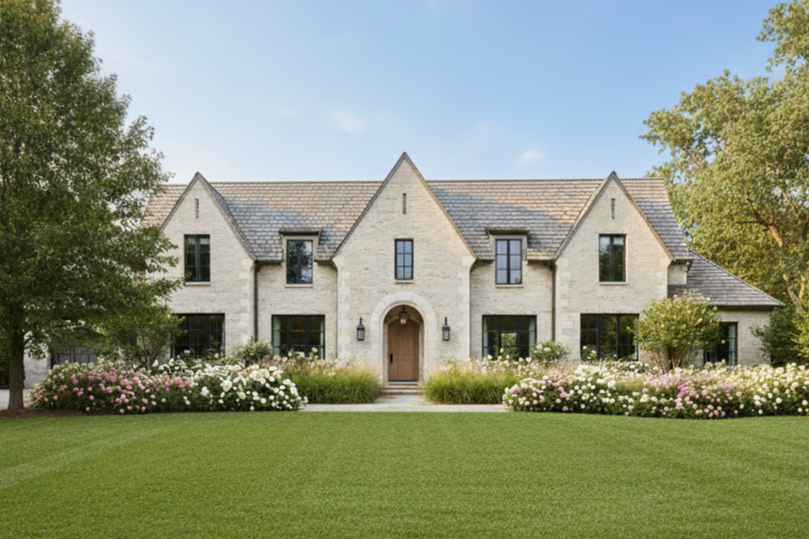
Architecturally, design is becoming more intentional. Rooflines feel calmer. Massing is more balanced. Forms are shaped to create ease, flow, and clarity rather than to follow trend.
Inside, we are seeing tactile materials and real texture instead of glossy perfection. Plaster and limewash, stone with movement, aged metals, and richly grained woods. Trim, molding, and architectural detailing are still very present, but expressed in a clean, edited, and thoughtful way instead of overly ornate.
The result blends the familiarity and soul of traditional architecture with the freshness and clarity of contemporary living. Homes feel warm, grounded, expressive, and truly livable.
The Revival of Antiques, Vintage Pieces, and Modern-Vintage Style
Alongside this architectural shift is a renewed love for vintage furnishings, collected objects, handcrafted pieces, and meaningful items with history.
Instead of staged interiors that feel installed in a single moment, homeowners are gravitating toward spaces that evolve naturally over time. Interiors feel like an expression of lived experience, personal stories, and individual taste.
This direction aligns beautifully with modern-traditional and modern-vintage design because:
the architecture creates calm structure and clarity
the interiors bring character, warmth, patina, and narrative
Patina is no longer seen as a flaw. It represents depth, time, and authenticity.
A vintage chest beside a clean-lined doorway.
A traditional chair with a simplified profile.
A brass lamp with age, resting against softly textured walls.
These combinations feel personal rather than prescribed.
Instead of asking, “Does this match?”, people are asking,
“Does this feel like me?”
Cottagecore Interiors, Whimsy, and Storybook Style Influence
Cottagecore and nostalgic design have helped reintroduce softness, romance, nature, and emotional warmth into interior spaces. Layered textiles, botanical patterns, handmade details, and garden-inspired motifs remind us that home is more than a backdrop. It is a refuge.
Storybook-inspired elements are appearing in subtle, modern ways:
soft curves instead of sharp edges
rounded transitions and archways
cozy nooks and intimate gathering spaces
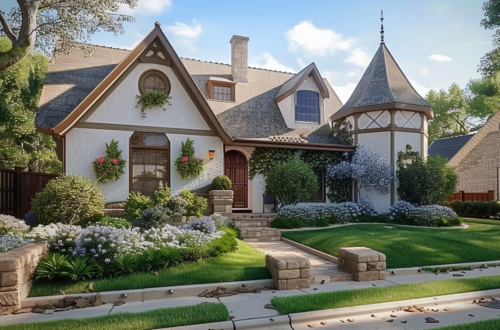
architecture that feels welcoming, human, and slightly poetic
Not literal fairy-tale houses. Instead, homes with charm, soul, and quiet magic.
Blended with clean-lined traditional architecture and modern-vintage interiors, these homes feel emotionally rich, grounded in history, and fully relevant to the way we live today.
Rethinking the Floor Plan: From Fully Open Layouts to Semi-Open, Human-Centered Design
One of the biggest design shifts happening right now is at the floor plan level. For years, the fully open concept was considered the ideal. Kitchens flowed directly into every space, foyers disappeared, and privacy was nearly erased.
Now, many people are realizing that this can feel loud, exposed, and overwhelming.
The emerging direction is a semi-open, hybrid floor plan. It maintains connection where it matters, while restoring privacy, definition, and architectural hierarchy.
We are seeing a thoughtful return to:
true foyers that create a sense of arrival
discreet powder rooms placed away from gathering spaces
hallways and transition zones that create rhythm and flow
clear separation between public and private areas
the end of primary bedrooms opening directly into living spaces
These ideas are not outdated. They are deeply human.
Semi-open layouts use cased openings, arches, alcoves, bookcases, and partial walls to create visual calm without closing the home off entirely. The kitchen remains connected, just not exposed from every angle.
At the same time, homes are embracing indoor-outdoor connection in a way that feels livable and serene. Deep porches, courtyards, shaded patios, loggias, and garden courts are designed for real daily life.
Breakfast on a porch.
Reading in filtered afternoon light.
Quiet conversations on a covered terrace.
Spaces that feel connected, but never chaotic.
A Homeowner’s Guide to Evaluating a Floor Plan
When reviewing a floor plan, it helps to ask:
Flow and Privacy
Are public and private spaces clearly defined?
Does the primary bedroom feel protected and intentional?
Are there quiet retreat spaces as well as gathering areas?
Kitchen Relationship
Is the kitchen connected without being fully on display?
Can mess and noise be contained when needed?
Entry and Circulation
Is there a true entry or foyer?
Do hallways guide movement instead of forcing traffic through rooms?
Indoor and Outdoor Use
Do outdoor spaces feel shaded, usable, and comfortable?
Are views framed thoughtfully instead of simply wide and open?
Emotional Experience
Where does the home feel calm?
Where does it feel exposed?
The most successful homes are not the largest or the most dramatic. They are the ones that feel thoughtful, grounded, and supportive of everyday life.
Designing a Home That Feels Personal, Collected, and Uniquely Yours
People drawn to these 2026 home design trends are not looking for generic builder trends or staged interiors. They want homes that reflect:
who they are
what they love
how they live
Clean-lined traditional architecture sets the foundation.
Modern-vintage furnishings add soul and character.
Personal, collected pieces bring meaning and depth.
Together, they create homes that feel timeless, grounded, and unmistakably personal.
This emerging movement is not about following style rules. It is about designing homes that feel warm, expressive, human, and deeply meaningful to live in.
Frequently Asked Questions
How do antiques and vintage pieces fit into modern-traditional design?
They add character, history, and emotional depth. The architecture provides clarity and structure, while vintage elements introduce warmth, patina, and storytelling.
Is this the same as minimalism?
No. This approach is not about reduction or restraint for its own sake. It is about edited richness, expressive interiors, layered materials, and personal meaning, balanced with clean architectural lines.
How does this approach influence floor plan design?
It supports semi-open layouts, privacy where it matters, and human-centered circulation instead of fully open exposure. Connection and retreat work together.
How does indoor-outdoor connection fit into this philosophy?
Outdoor spaces function as sheltered extensions of daily life. Courtyards, porches, and shaded terraces are designed for comfort, quiet moments, and regular everyday use.
If you are drawn to modern-traditional architecture, semi-open floor plans, vintage-layered interiors, or homes with story, charm, and personality, I would love to help you explore how these ideas could shape your own home.
Together, we can create a space that feels warm, personal, expressive, and deeply meaningful to live in.