
Design + Visualize
 The Owner-Builder Roadmap: From Dirt to Groundbreaking
If you are feeling overwhelmed by the order of operations, follow this path to transition from an idea to a buildable reality:
Site & Constraints: Secure your land. Verify access to utilities (electricity, water, roads). Obtain a boundary survey and check Zoning Requirements to ensure your intended home type is permitted and to identify “setbacks” (how far the house must stay from the property line).
Budgeting: Define your maximum “all-in” budget. This must include land, design, local engineering, permits, materials, and labor.
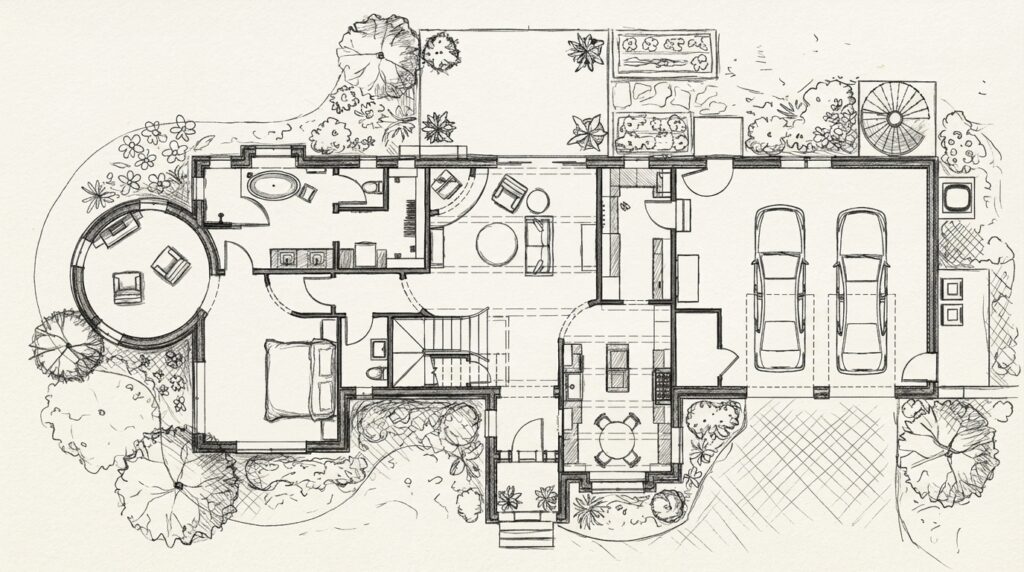
Design & Visualization (My Role): We collaborate to create your floor plans, elevations, and 3D renderings. I provide the “visual roadmap” and technical drawings.
Bidding & Selection: Use my plans to interview contractors and subcontractors. Collect bids to ensure the design aligns with your real-world budget.
Refinement: If bids come back higher than expected, we update the plans to adjust the scope or materials before proceeding to the expensive engineering phase.
Local Engineering: You take the refined design to a structural engineer licensed in your specific state to finalize the foundation and framing math.
Permitting: Submit the completed design and engineering package to your local building department.
Break Ground: With approved permits and my detailed 3D renderings in hand, you begin the physical build.
 Services & My Role
What exactly is my role in your project?
I am your technical designer and visualization partner. I provide the professional drawings required for construction, but I do not offer project management, site supervision, or material purchasing. This focus allows me to keep my fees accessible for owner-builders while giving you 100% control over the execution.
Do I hire the structural engineer for you?
No. It is essential that you hire a structural engineer licensed in your specific state or province. Building requirements vary drastically by region—from hurricane-force wind loads in Florida to heavy snow loads in Minnesota or seismic activity in California. A local engineer ensures your home is safe and compliant with the exact environmental demands and local codes of your site.
Architect vs. Building Designer: Which do I need?
For most residential custom homes, a Certified Professional Building Designer (CPBD) like myself is the most efficient and specialized choice.
| Feature | Licensed Architect | Certified Building Designer (CPBD) |
| Specialization | Commercial & High-Density | Custom Residential & DIY Builds |
| Experience | Broad architectural licensing | 25+ Years Experience in Home Design |
| Cost | Higher (Due to overhead/PM) | Competitive (Design-Focused) |
| Stamping | Required for 10k+ sq. ft. | Standard for most residential builds |
Building Designer: Many designers, like myself, have years of experience and design degrees but choose not to pursue the architect track. As a CPBD, I specialize in residential building science and the nuances of how people live in their personal spaces.
 Visualization: Understanding Your Plans
How do my plans help you communicate with subcontractors?
I provide high-fidelity 3D renderings alongside technical 2D blueprints so there is zero guesswork. You don’t have to be an expert at reading architectural symbols to explain your vision to a plumber or electrician. You can simply show them exactly how the finished space should look, which helps prevent expensive mid-build miscommunications.
What should I check regarding my land before we start?
Design starts with the dirt and the law. Beyond a survey, you must verify Zoning and Land Use restrictions. I use your survey and zoning data to ensure the design fits perfectly within your legal “buildable envelope,” helping you avoid legal headaches or unexpected grading costs later.
 Technicalities & Professionals
What other professionals will I need to hire?
As an owner-builder, you are the “hub” of the wheel. In addition to my design services, you will typically need:
Land Surveyor: To determine boundaries, topography, and easements.
Structural Engineer: To design and stamp the framing and foundation math for your local climate.
Septic/Civil Engineer: Required if your site has complex waste, drainage, or road access needs.
Does my design include specific material brands?
No. To keep your costs lower and your choices flexible, I provide the architectural intent. You will work with your local suppliers to choose specific brands of flooring, windows, or appliances that fit your personal budget and local availability.
 Credentials & Expertise
What is my professional background?
I am a nationally Certified Professional Building Designer (CPBD) and a Registered Interior Designer with over 25 years of experience. My work has been recognized as the 2024 & 2025 IDS Designer of the Year for Digital Rendering. My background spans from fine art and film set design to the restoration of over 30 historic homes.
Why hire a designer who is also a Registered Interior Designer?
Because I am NCIDQ Certified, I design from the inside out. I consider furniture placement, lighting, and interior flow simultaneously with the structural layout, ensuring your home is as functional as it is beautiful.
What is my role in your project?
I am your technical designer and visualization partner. I provide the professional floor plans, elevations, and 3D renderings required to turn your ideas into buildable solutions. Because I work strictly in design and do not offer project management, material purchasing, or site supervision, I am able to keep my fees lower and focus entirely on the quality of your plans.
How do I collaborate with you remotely?
I use email, phone, and video conferencing to work with clients across the country. You provide the site details and requirements; I provide the digital blueprints. This remote model is ideal for the self-managed builder who wants high-level expertise without the cost of local firm overhead.
Will I need to hire a builder or can I do it myself?
While some clients act as their own General Contractor, you must decide if you have the experience to manage the build. My plans serve as the “instruction manual” for your project. If you are not a licensed builder, I recommend hiring a professional to handle the physical construction while you maintain control of the project management.
 Professional Credentials & Comparisons
Architect vs. Building Designer: Which do I need?
For most residential custom homes, a Certified Professional Building Designer (CPBD) like myself is the most efficient and specialized choice.
| Feature | Licensed Architect | Certified Building Designer (CPBD) |
| Specialization | Commercial, Estates, & High-Density | Custom Residential & DIY Builds |
| Experience | Broad architectural licensing | 6+ years focused on Home Design |
| Cost | Typically higher (Full Service) | Competitive (Design-Focused) |
| Stamping | Required for buildings over 10k sq. ft. | Standard for most residential builds |
What is the difference between a “Drafter” and a “Building Designer”?
A drafter simply draws what you tell them. As a nationally certified designer with 25 years of experience, I provide design logic. I look for structural efficiencies, spatial flow, and aesthetic balance that a simple drafting service might miss.
Permits, Codes, & Other Professionals
What other professionals will I need to hire?
As an owner-builder, you are the “hub” of the wheel. Beyond my design plans, you will likely need:
Structural Engineer: To design the foundation and framing for your specific soil and wind loads.
Land Surveyor: To determine your property boundaries and topography.
Septic Designer: (If not on city sewer) to design your waste system.
Civil Engineer: If your site requires complex drainage or grading plans.
How do I ensure my design complies with local building codes?
My designs follow general industry best practices, but local compliance is your responsibility. You will work with your local structural engineer and building department to ensure the final plans meet the specific “reach-out” requirements of your municipality.
How do I obtain building permits?
You will submit the design documents I provide to your local building department. I do not handle the submission or follow-up, which keeps your costs lower. I am available to provide clarifications on my designs should the permit office have questions.
 Managing Costs & Quality
What should I know about my land before we start the design?
Design starts with the dirt. As an owner-builder, you are responsible for providing a land survey. I use that data to ensure your floor plan fits within your ‘buildable envelope’ (setbacks and easements), helping you avoid legal headaches or unexpected grading costs later.
How do I choose the right materials?
To keep your project flexible and cost-effective, you maintain full control over material selection and purchasing. I provide the visual guidance and style inspiration in my 3D renderings, but you choose the specific brands, finishes, and suppliers that fit your budget.
How do I find and hire reliable contractors or trades?
I recommend seeking referrals from local building supply yards (not just big-box stores) and checking licenses through your state board. Because I do not recommend specific trades, you are free to interview multiple contractors and choose the team that offers the best value for your specific build.
How can I future-proof my home design?
I focus on “Universal Design” and efficiency. During the design phase, I can help you plan for energy-efficient systems, smart home integration, and layouts that allow for “aging in place,” ensuring your home remains functional for decades.